
Sun Protection: Why You Shouldn’t Skip SPF This December
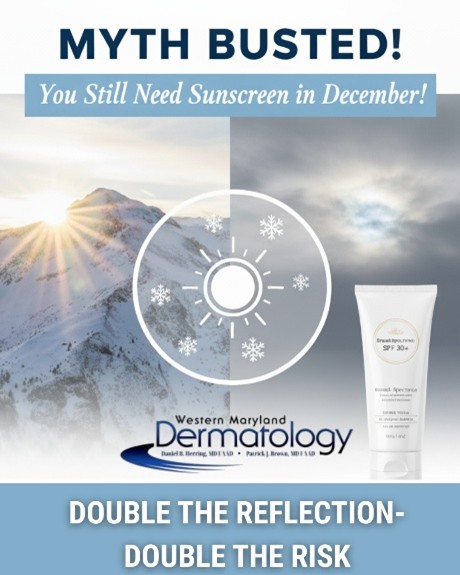
As the temperature drops and the days grow shorter, it’s tempting to tuck away your sunscreen until spring. But at Western Maryland Dermatology, we believe — and dermatologists everywhere agree — that sun protection isn’t seasonal. The fact is: the sun’s damaging UVA and UVB rays are present 365 days a year, even on cold, cloudy winter days.
Why Winter Sunscreen Matters
UV rays don’t take a holiday. The AAD notes that even on overcast days, up to 80% of UV rays can penetrate clouds and reach your skin.
Reflection amplifies exposure. Snow, ice, water, and even frost can reflect UV rays — which means time spent outdoors during winter could expose you to more UV radiation than on a clear summer day.
Risk is yearround. Both UVA (which penetrates deeply, causing skin aging, wrinkles, dark spots) and UVB (which causes sunburn) rays contribute to longterm skin damage, including increased risk of skin cancer — and that risk doesn’t go away simply because it’s winter.
AADRecommended Sunscreen Habits — Even in December
According to the AAD, here’s how to protect your skin properly:
Use a broadspectrum sunscreen with SPF 30 or higher. This guards against both UVA and UVB rays.
Apply sunscreen every morning to all exposed skin — don’t forget often-overlooked areas like your face, ears, neck, lips, hands, and the back of your neck.
Apply about 15 minutes before sun exposure, and reapply every two hours if you’re outside — or sooner if you’re sweating or snow is reflecting extra UV.
Complement sunscreen with sunprotective clothing when possible: wide-brimmed hats, UVblocking sunglasses, long sleeves, or gloves. Snow or bright winter sun can intensify exposure — especially for extended outdoor activity.
What This Means for You — and Why December Is a Great Time to Pause & Prep
Even if you’re not planning a tropical vacation or a summer hike, daily life this winter can put you at risk: shoveling snow, walking your dog, errands, driving midday — or even sun coming through windows. Because UV exposure adds up over time, skipping sunscreen just a few months a year can increase longterm risk of skin damage and aging.
By making sunscreen a habit now, you’re not only protecting against sunburns or winter burns — you’re investing in your longterm skin health, reducing the risk of premature wrinkles, dark spots, and even skin cancer.
At Western Maryland Dermatology, we encourage you to treat SPF as an essential part of your morning routine — just like brushing your teeth or washing your face. Pair your sunscreen with a gentle moisturizer (especially in winter’s dry air) for the healthiest, most resilient skin.