
Managing Eczema, Rosacea, and Psoriasis During the Winter Months
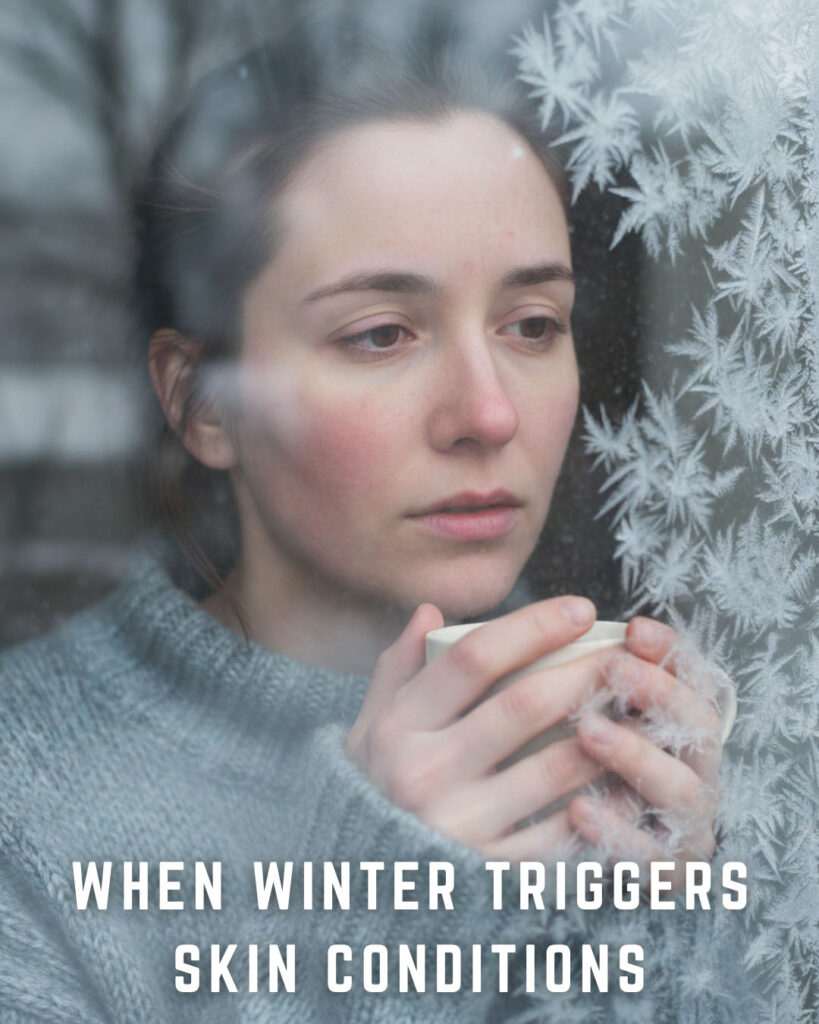
Winter can be especially challenging for people living with chronic skin conditions like Eczema, Rosacea, and Psoriasis. Cold outdoor air, low humidity, and indoor heating all work against your skin’s natural barrier, often leading to flare-ups during the winter months. Understanding your triggers and adjusting your skincare routine can help keep symptoms under control until spring arrives.
Why Winter Triggers Flare-Ups
During winter, the air holds less moisture, which can dry out the skin quickly. Indoor heating further reduces humidity, weakening the skin barrier and making it more vulnerable to irritation and inflammation. Common winter triggers include:
- Cold, windy weather
- Dry indoor air
- Hot showers and baths
- Harsh soaps or over-washing
- Stress and seasonal changes in routine
These factors affect eczema, rosacea, and psoriasis differently—but all benefit from extra care during colder months.
Winter Care Tips for Eczema
Eczema-prone skin struggles to retain moisture, especially in winter.
- Use gentle, fragrance-free cleansers
- Apply a thick moisturizer immediately after bathing to lock in moisture
- Take short, lukewarm showers instead of hot ones
- Wear soft, breathable fabrics like cotton to reduce irritation
Keeping skin consistently moisturized is key to preventing itching and flare-ups.
Managing Rosacea in Cold Weather
Cold temperatures and wind can trigger rosacea flare-ups, while indoor heat can worsen redness.
- Protect your face with a scarf or mask when outdoors
- Avoid sudden temperature changes when possible
- Use gentle skincare products and avoid alcohol-based formulas
- Continue wearing daily sunscreen, even in winter
Being mindful of environmental changes can help reduce redness and sensitivity.
Psoriasis Care During Winter
Psoriasis often worsens in winter due to dry skin and reduced sun exposure.
- Moisturize regularly with thick creams or ointments
- Avoid over-scrubbing or harsh exfoliation
- Stick to prescribed treatments consistently
- Manage stress, which can be a major trigger
Maintaining your treatment routine—even when symptoms improve—is important during the colder months.
When to See a Dermatologist
If your symptoms worsen, become painful, or stop responding to your usual treatments, it may be time to schedule a dermatology appointment. A dermatologist can:
- Adjust or prescribe treatments
- Help identify personal triggers
- Recommend medical-grade skincare products
- Prevent minor flare-ups from becoming severe
Healthy Skin All Winter Long
Winter doesn’t have to mean constant flare-ups. With the right skincare routine, trigger awareness, and professional guidance, eczema, rosacea, and psoriasis can be managed effectively throughout the colder months.
If your skin condition is interfering with your comfort or confidence this winter, don’t wait—a personalized treatment plan can make all the difference.